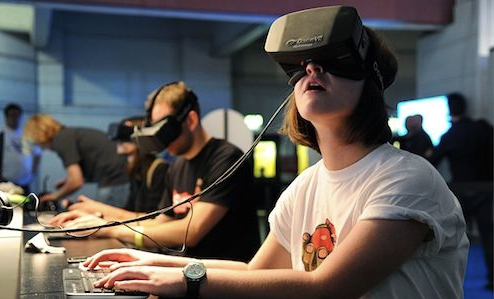
Virtual Reality (VR) is increasingly recognized for its potential in enhancing remote collaboration. It creates immersive environments that facilitate deeper engagement among team members. By overcoming geographical barriers, VR promotes effective idea sharing and collaborative problem-solving. However, the adoption of VR in professional settings is not without its challenges. As organizations explore this technology, the implications for team dynamics and communication methods could be profound. What might the future hold for VR in the workplace?
How VR Enhances Team Interaction and Engagement
As organizations increasingly adopt virtual reality (VR) technologies, they discover that VR significantly enhances team interaction and engagement.
By creating immersive environments for virtual meetings, team members feel more connected and present, fostering collaboration.
This shift allows participants to share ideas and experiences in a dynamic setting, transforming traditional communication methods and empowering teams to engage more freely and effectively across distances.
The Advantages of Using VR for Remote Collaboration
The integration of virtual reality (VR) in remote collaboration offers a transformative advantage that enhances productivity and innovation.
By providing immersive experiences, VR fosters a sense of virtual presence that bridges geographical divides. Team members can engage more deeply, share ideas seamlessly, and visualize concepts collectively, leading to enhanced creativity and problem-solving.
This technology empowers teams to collaborate effectively, regardless of location.
Challenges and Limitations of VR in Teamwork
While virtual reality (VR) presents numerous benefits for remote collaboration, several challenges and limitations hinder its widespread adoption in teamwork.
Technical barriers, such as high costs and complex setup procedures, can deter organizations from embracing this technology.
Additionally, user discomfort, including motion sickness and ergonomics, poses significant hurdles, limiting the ability of team members to engage fully in immersive environments.
See also: seemnews
The Future of VR in Remote Work Environments
Emerging advancements in virtual reality technology are poised to reshape remote work environments significantly.
The integration of immersive training modules will enhance employee skill development, while virtual offices will create collaborative spaces that transcend geographical barriers.
As organizations embrace these innovations, they will foster a more engaging, productive atmosphere, empowering workers to connect and collaborate freely, ultimately redefining the future of remote work.
Conclusion
In the evolving landscape of remote collaboration, VR acts as a bridge over the vast ocean of distance, allowing teams to navigate the complexities of communication with newfound clarity. Just as a lighthouse guides ships safely to shore, VR illuminates the path for creative problem-solving and engagement. As technology advances, the potential for VR to enhance teamwork will transform how individuals connect, ultimately crafting a more cohesive and innovative workforce ready to tackle the challenges of the future.